13
Don’t Wait Until Disaster Strikes to Make Sure Homeowners Insurance Is Adequate
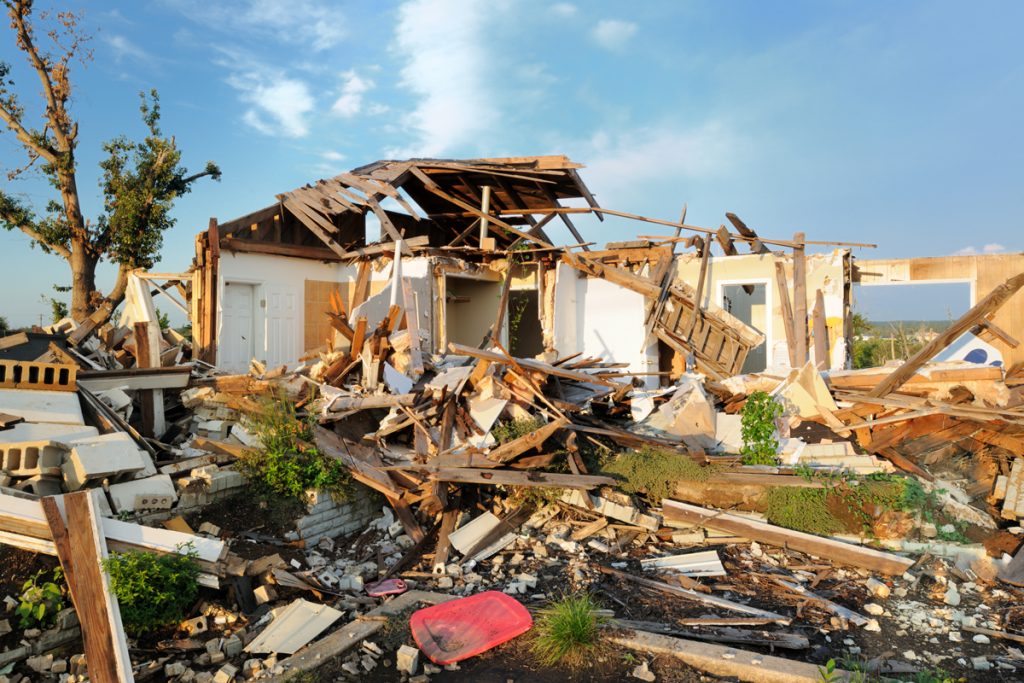

Home is where the heart is. It also can be where the heartache is when disaster strikes. Long before something goes wrong, you need to ask, “How much homeowners insurance do I need?”
Homeowners insurance protects your home and possessions against a variety of perils. This includes damage, theft and natural disasters such as floods, hurricanes, fires and earthquakes.
“Homeowners coverage provides financial protection, that’s really what it’s all about,” said Mark Friedlander, director of corporate communications at the Insurance Information Institute in New York.
Mortgage companies require a certain amount of coverage. But unlike car insurance, there aren’t any state mandates requiring people to have it.
“If you don’t have a mortgage, you are not obligated to buy homeowners coverage and we think that’s a critical error that people make. Because unless you have a lot of money set aside, you’re going to have a financial hit, and you’re not going to be protected,” Friedlander explained.
Even if you do the minimum to satisfy your mortgage company, it often isn’t enough. Friedlander said most people make the mistake of not having enough insurance to adequately protect themselves and their families.
So, how much homeowners insurance do you need?
If you’re doing the smart thing and asking yourself how much homeowners insurance you need, it’s best if you understand some of the basics of the policies.
Policies generally cover:
Within each policy, there are typically three levels of coverage. These levels of coverage become important after a covered event when you begin to repair or rebuild.
“A lot of times, actual cash value policies are for homes that don’t qualify for replacement cost policies. They are not in as good of shape or have an older roof or something like that,” said Craig Peterson, an agency owner for American Family Insurance in Overland Park, Kansas. He usually recommends no less than replacement cost policies to his clients.
It’s important to know what types of coverage you have and what situations are covered. It is just as necessary to know what is not covered. Or, what might be covered with additional restrictions or different deductibles.
Different policies cover specific problems for varied types of structures. For example, you may need a condo policy, renters insurance policy, etc. The policies have designations from HO-0 to HO-8.
There are also differences when it comes to paying for things like additional living expenses, hotels, meals, etc., if your home is uninhabitable.
For more information about the basics of home insurance policies and what they cover, What Home Insurance Actually Covers (and Where You’re on Your Own) can answer many of your questions.
So, how much home insurance coverage do you need to buy? There are many factors to consider.
Basically, you need to look at what your house would cost to rebuild, the likelihood of certain types of disasters in your area, the value of your possessions and your liability exposure.
“You are preparing for the worst-case scenario, not for a minor claim. You need to be prepared for a catastrophic loss,” Friedlander said. “That’s possible whether it’s hurricanes, tornadoes or wildfires. In virtually any part of the country, you are living somewhere where you could sustain a catastrophic loss and lose your entire home.”
After a disaster, you want to make sure you can cover the costs of repairing or rebuilding your homeThe cost to rebuild your house is not the same as your home’s market value. In most cases, the land your house sits on will still be there after a catastrophe. So, you don’t need to insure that value.
“What we typically see is a majority of homeowners are underinsured,” Friedlander said. “Unfortunately, many of the homeowners purchase insurance protection to satisfy their mortgage lender, but they confuse the real estate value of their home with what it would cost to rebuild it.”
So, don’t focus on what you paid for the house, its market value, how much you owe on your mortgage or the property tax assessment.
“Most companies use a replacement cost calculator where we plug in the square footage, bedrooms, bathrooms — all the features we can about the house,” Peterson explained. “It gives us a valuation based on the cost to rebuild, and we base the coverage on that.”
Consider what type of coverage you want (actual cost, replacement cost, or guaranteed replacement cost) when you are shopping for policies.
Friedlander said actual cash value saves some money on premiums. However, you will get less in the event of a major loss. Replacement cost coverage is about 10% more in premiums. But you will get about 30 to 50% more when you file a claim.
Peterson said it is important to ensure that unique things that happen in your area are covered. Depending on where you live, you might need additional coverage for earthquakes, hurricanes, tornadoes, wildfires, sinkholes, etc. that are not generally part of a policy.
To know how much coverage you need, you need to know what you own. Placing a value on your possessions is important.
“The important thing is to do a home inventory and kind of assess what your valuables are and determine what the value of everything is so that you’re at the right level of protection,” Friedlander said.
Go room by room and consider taking photos or videos. Make sure to include things like:
You don’t need to include your cars in this property inventory. Vehicles are not covered by homeowners policies — even if they’re parked in the garage.
“Most of the time, the personal property coverage is a straight percentage of the dwelling coverage — typically, 70 to 75%,” Peterson said, adding that this amount is usually enough to cover contents.
With most policies, there is often a limit on pricier items like jewelry, art, furs, silver or electronics. So, if a fire destroys your house and you lose $10,000 worth of jewelry, your policy might only cover $1,000 of that loss.
To make sure all of your pricey items are covered, Peterson recommended a separate personal articles policy.
The liability section of your homeowners policy covers bodily injury or damage that policyholders or their family members (including pets) cause to others. This policy could cover you if:
Liability coverage will also pay for the cost of defending yourself in court and any court awards up to the limit of the policy.
“The risk of not having enough liability coverage is that you’re going to be on the hook for anything beyond your coverage,” Peterson warned.
He said dog bites are his most common liability claims. He also sees people who don’t believe they need it all the time. Why? They think nobody would ever sue them.
“We find that a lot with insurance. People don’t want to pay for things until they have a problem, and then they wish they had. People are nice until something happens.”
The Insurance Information Institute recommends at least $300,000 in coverage, but many policies only include $100,000. The more assets you have, the more coverage you need.
If you have more assets than your current liability coverage will pay for, you may want to consider an umbrella policy in addition to your homeowners insurance. An umbrella policy extends your coverage to a higher amount.
To determine how much liability coverage you need, add up the value of your assets, including your home. Make sure to include the following assets when figuring liability:
Peterson said if you have something that could pose a risk to others, like a pool or trampoline on your property, you need to be especially aware of the amount of liability coverage you have.
You don’t need to figure out everything alone. A good insurance agent should be able to guide you through the process of answering the question, “How much homeowners insurance do I need?”
“We always recommend meeting with your insurance professional once a year. We call it an insurance checkup,” Friedlander said. “Review all your coverages and make sure you are protected.”
Not having enough coverage can be a big mistake.
“People think that things can never happen to them, and then they wish after the fact that they had taken a little more time and maybe gone for some of the coverages that they decided not to take,” Peterson said. “The biggest mistake people make is they try to save money on their policy instead of making sure that they’re covered properly.”
Tiffani Sherman is a Florida-based freelance reporter with more than 25 years of experience writing about finance, health, travel and other topics.
Ready to stop worrying about money?
Get the Penny Hoarder Daily
Some of the links in this post are from our sponsors. We strive to provide accurate, reliable information.
Compensation may influence how and where products appear on our site (including their order), and we do not include all companies or offers.