7
Sick of Spreadsheets? Here’s How to Budget Using a Calendar
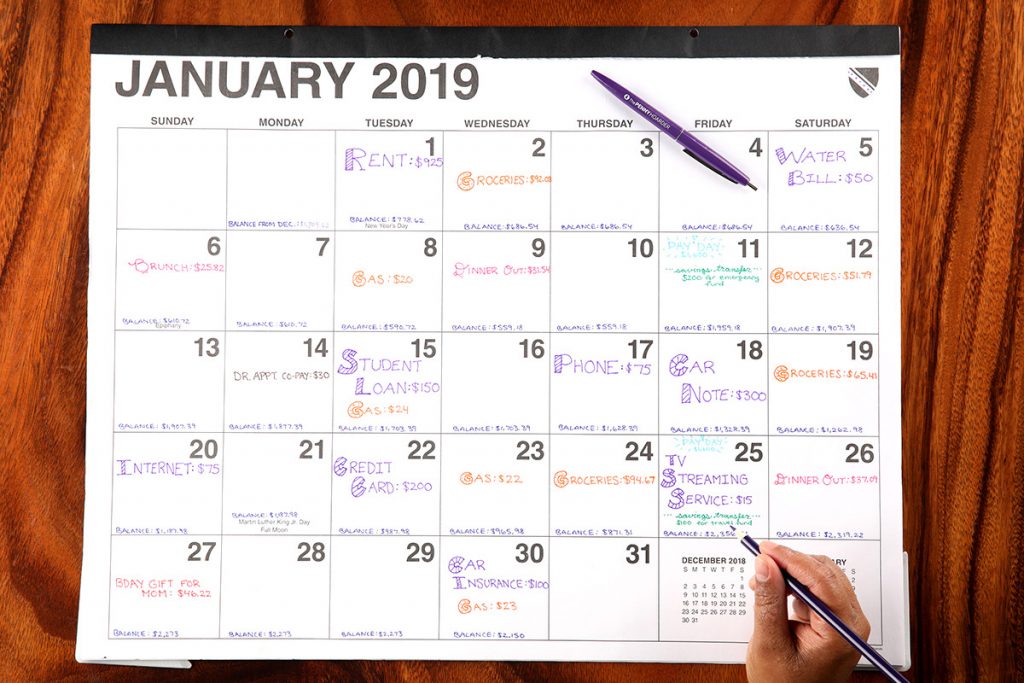

Put the spreadsheets aside. Don’t worry about downloading an app. You can manage your money with a simple tool you probably already use on a regular basis — your calendar.
It doesn’t matter whether you use a wall calendar, a desk calendar or a notebook-style planner. A calendar white board, the calendar on your phone or one that syncs to your email will work too.
As long as you have space to jot down a few details regarding your cash inflow and outflow, you can use the calendar budgeting method.
Creating a calendar budget isn’t complicated. Just pull out your calendar of choice — paper or digital — and get started.
Mark down your paydays and how much you’ll get paid. If your pay is irregular, you can use an average or conservative estimate — or just wait until you actually receive your paycheck.
Write down all your fixed expenses for the month. This includes regular bills as well as doctor’s appointments, salon visits, scheduled car maintenance and any other time you plan to spend a set amount of money. Don’t forget to include bills set up on auto pay.
If you add a certain amount of money to an emergency fund or to various sinking funds to meet short-term savings goals, mark on your calendar when and how much money you plan to transfer out of your main account.
For variable spending (like groceries, gas and entertainment) or any unexpected expenses, record them as they arise rather than trying to estimate when and how much you’ll spend. Take note of upcoming holidays, birthdays or events that’ll cause an uptick in spending. Avoid overspending by establishing limits for each budget category based on past averages.
Keep a running total of your daily balance to know where your finances stand on any given day. Use any money left over at the end of the month to pay down debt or bulk up savings. If you had to dip into savings, borrow money or use a credit card, look at all the spending laid out on your calendar to find where you can cut costs. You can also keep a running balance for each variable spending budget category so you know how close you are to your spending limits.
Now that you know the basics to using a calendar budget, here are a few suggestions to help you master this method:
Feeling overwhelmed? Create a budget that works for you with our budgeting bootcamp!
Nicole Dow is a senior writer at The Penny Hoarder.
Ready to stop worrying about money?
Get the Penny Hoarder Daily
Some of the links in this post are from our sponsors. We strive to provide accurate, reliable information.
Compensation may influence how and where products appear on our site (including their order), and we do not include all companies or offers.