10
The Supreme Court Blocked Student Loan Forgiveness. What Now?
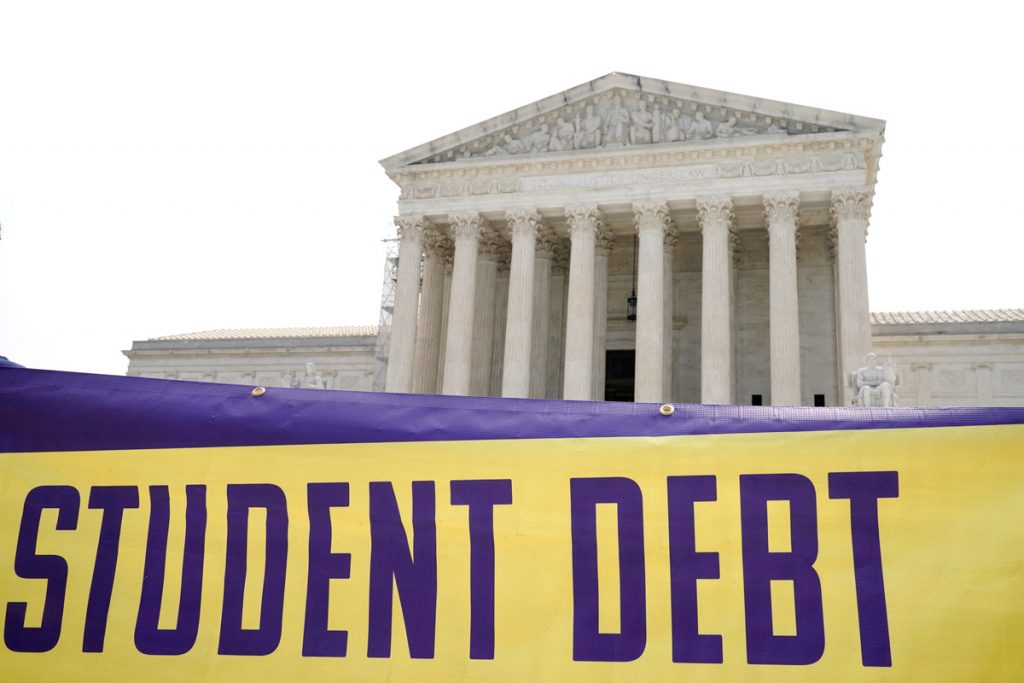

For student loan borrowers across the nation, Black Friday came on June 30, 2023 — and it was marked by the Supreme Court decision to block Biden’s student loan forgiveness plan.
The plan would have allowed the U.S. government to cancel $20,000 in federal loans for Pell Grant recipients and up to $10,000 for millions of other borrowers.
With the 6-3 vote, 43 million borrowers will also now begin resuming payments as early as October 2023. Under the plan, around half of said borrowers would have seen their loan debt completely eliminated.
While the ruling will affect borrowers across all age groups, those aged 35 to 49 will be hit the hardest, as they hold more than $600 billion of the total of the nearly $1.8 trillion owed.
The U.S. Department of Education received more than 26 million forgiveness applications — 16 million of which had been approved — before closing the application in the face of court challenges.
After this groundbreaking decision, what’s next for student loan borrowers?
With payments set to resume in just a few months, those 43 million borrowers might be scrambling to pay their student loan bills without going into default.
According to NPR, President Joe Biden plans to announce new protections for student loan borrowers following the Supreme Court’s decision.
“I believe that the court’s decision to strike down our student debt relief plan is wrong,” Biden said in a statement hours after the decision. “But I will stop at nothing to find other ways to deliver relief to hard-working middle-class families. My administration will continue to work to bring the promise of higher education to every American.”
In the meantime, there are a few ways you may be able to lower your student loan debt or payments.
Since 2007, the Public Service Loan Forgiveness Program (PSLF), has helped those who work in public service — health care, education, social services and so on — get out of student loan debt quicker as long as they followed some strict, and often confusing, guidelines.
The program has been notoriously mismanaged, but it underwent an overhaul in 2022 with a renewed commitment from the Biden administration. Though the PSLF waiver — which had less stringent rules — expired in October 2022, the program is still available if you work in public service.
You can use the PSLF help tool to determine whether you have a qualifying employer and what other steps you might need to take to become eligible for PSLF.
About 43 million Americans currently have an average of $37,717 in student loan debt — meaning the large majority of borrowers are not public service workers and will not qualify for the PSLF program.
If you find yourself in that group, you have other options. You might have other ways to get your loans forgiven, canceled or discharged. You could qualify if:
If you’re out of forgiveness options, the reality is you might be on the hook for making payments on the amount you borrowed.
While that might not be ideal, the good news is that you can build a solid plan to get out of debt.
Here are a few ideas:
As you pay off student loan debt, consider getting a side hustle to bring in additional income and make extra payments.
Robert Bruce is a senior staff writer at The Penny Hoarder covering earning, saving and managing money. He has written about personal finance for more than a decade.
Ready to stop worrying about money?
Get the Penny Hoarder Daily
Some of the links in this post are from our sponsors. We strive to provide accurate, reliable information.
Compensation may influence how and where products appear on our site (including their order), and we do not include all companies or offers.